Bahnhofstrasse
5 min walk
This famous shopping street connects directly to the central station area, making it a logical stop for those interested in architecture and retail.
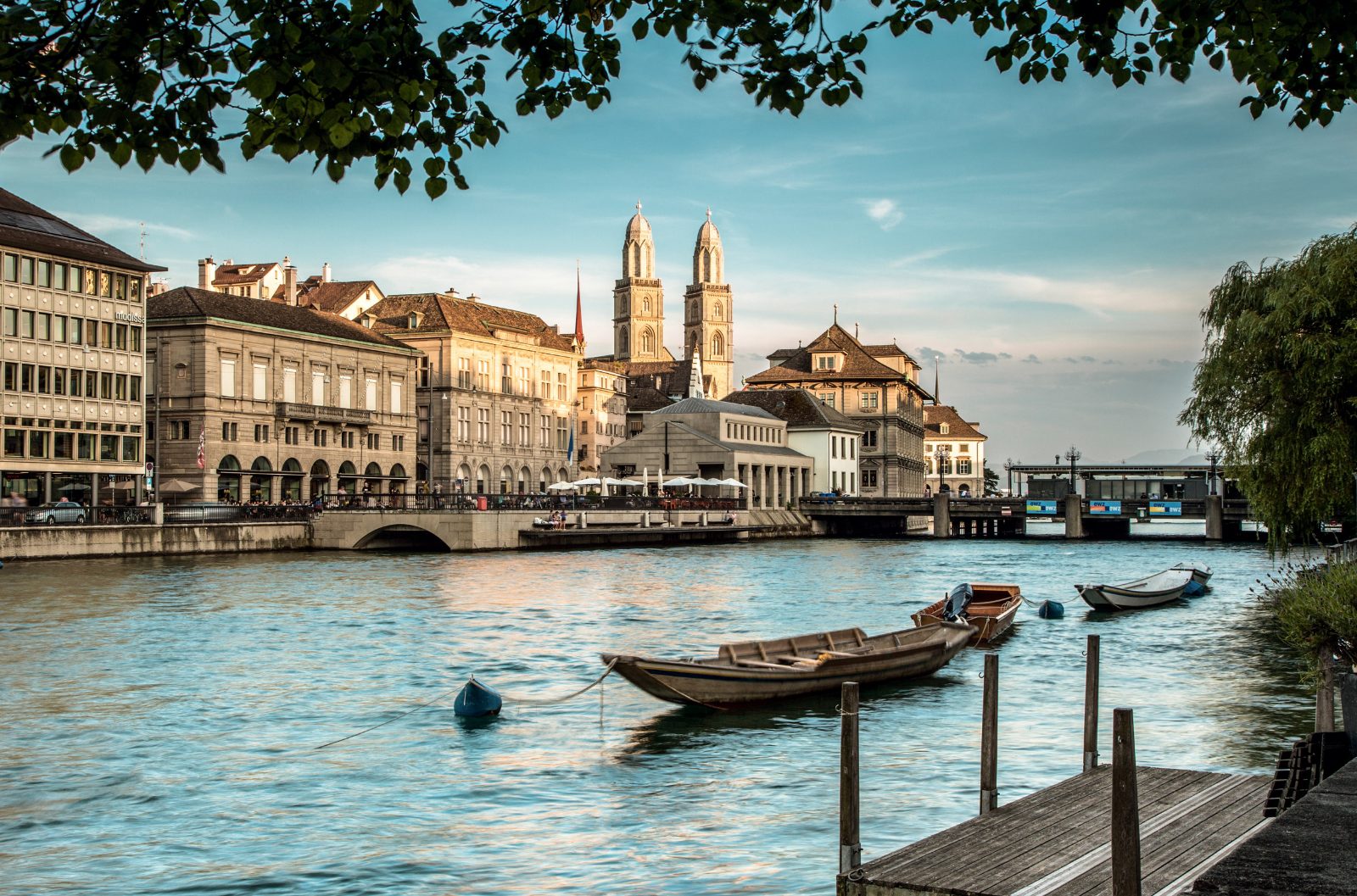
Zurich's compact center packs medieval lanes, waterfront promenades and panoramic viewpoints into a walkable circuit that takes five to seven hours at a comfortable pace. This guide maps the route from Bahnhofstrasse to Lindenhof, Grossmünster and the university quarter, with arrival windows that avoid midday crowds and catch the best light over the Limmat.
Quick answer
A well-paced zurich city tour itinerary covers Bahnhofstrasse, Old Town, both riverbank churches, Lindenhof hill and the university district in five to seven hours, starting between 09:00 and 11:00 when morning light illuminates the Limmat and cobblestone alleys remain quiet. The route is entirely walkable, with optional tram links to compress travel time between the lake district and Zürichberg if your schedule is tight. Most waypoints are free public spaces; budget around 25–40 CHF for museum entries if you add Landesmuseum or Kunsthaus extensions.
Zurich's public squares, church towers and riverbanks have been open to visitors without charge since the canton abolished entry fees for civic spaces in the nineteenth century. That unusual policy means a zurich city tour itinerary can thread together a dozen landmarks without a single ticket gate, relying instead on tram precision and pedestrian geography to move between districts. The result is a route shaped more by topography than admission schedules: you walk where the Limmat bends, climb where the medieval ramparts rose, and pause where sightlines open toward the Alps. The classic circuit begins at Bahnhofplatz, follows Bahnhofstrasse south to the lake, crosses the Quaibrücke to reach the east bank, then works north through Niederdorf's narrow lanes to Grossmünster. From the church's twin towers the route doubles back across the Münsterbrücke to Fraumünster, climbs the Lindenhof terrace for the canonical city view, and finishes in the university quarter near the Eidgenössische Technische Hochschule. That sequence respects both the city's vertical layering—lakefront to hilltop—and its historical core, where Roman foundations, guild houses and Reformation-era churches occupy the same compact grid. Timing matters less for access than for experience. Arrive between 09:00 and 11:00 and you catch the Limmat in oblique morning light, the kind that renders the water jade-green and throws long shadows across Weinplatz. Lindenhof, the raised plaza that offers the most-photographed panorama of Old Town, sits west-facing; it reads flat under noon sun but gains depth and color after 15:00. Niederdorf's cafés and guild-hall façades handle foot traffic gracefully until about 13:00, when lunch service fills the terraces and the lane narrows perceptually. If your zurich city tour itinerary includes Landesmuseum or Kunsthaus, slot them before midday or after 16:00 to avoid school groups. The route is engineered for walking, but Zurich's tram grid lets you compress segments without sacrificing continuity. Tram 4 runs the length of the circuit from Bahnhofplatz to Helmhaus in under eight minutes; line 6 connects the university district back to the Hauptbahnhof. Most visitors stay on foot to preserve the rhythm of discovery that comes from moving at three kilometers per hour through a city built for that pace. The Limmat promenade, Münsterhof courtyard and Lindenhof stairs were designed as pedestrian sequences, and skipping any one of them disrupts the spatial logic that makes the itinerary coherent rather than arbitrary.
“Zurich's public squares and riverbanks have carried no admission fee since the nineteenth century, allowing a full-day route to unfold without a single ticket gate.”
This half-day walking route suits first-time visitors and covers Zurich's core historic district in four to five hours, including breaks.
Start at Bahnhofplatz and walk south along Bahnhofstrasse, Zurich's main shopping boulevard, to the lake. The lakefront promenade offers views of the Alps on clear days—allow 45 minutes.
Cross the Limmat to visit Fraumünster, known for its Chagall stained-glass windows. Entry is free; plan 20 minutes inside.
Walk north to Grossmünster's twin towers, then explore the narrow lanes of the Old Town—medieval guildhalls and courtyards line the river. Budget 60 minutes for both.
Climb to this elevated square for panoramic views over the rooftops and Limmat. It's a quiet spot for a break—15 minutes is enough.
Descend into Niederdorf, the car-free historic quarter filled with cafés and restaurants. Allow 90 minutes for lunch and wandering.
Walk uphill to ETH Zurich's terrace for a final viewpoint over the city and lake. Return to Bahnhofplatz on foot or via tram 6 or 10—30 minutes total.
The best arrival window for a Zurich city tour is between 09:00 and 11:00. This timeframe provides optimal lighting for photography and ensures fewer crowds before the midday peak.
Mild, 10°C to 18°C. Ideal for walking tours.
Early season visitors benefit from pleasant temperatures and fewer tourists.
Warm, 18°C to 25°C. Sunny days are common.
Expect peak visitor numbers and vibrant outdoor activity near the city center.
Cool, 8°C to 16°C. Crisp air and clear skies.
This period offers stable weather conditions suitable for exploring public spaces.
—
Arriving during the 09:00–11:00 window offers the quietest experience for visitors.
Verdict: For the quietest experience and best lighting, plan your visit from Tuesday to Thursday between 09:00 and 11:00 during the months of April or October.
Bahnhofplatz serves as the primary gateway for your Zurich city tour, located directly at the main railway station. It is easily accessible via all major local and regional transport networks.
S-Bahn lines S2, S3, S4, S5, S6, S7, S8, S9, S11, S12, S15, S16, S19, S21, S24 to Zürich HB
Lines 3, 4, 6, 7, 10, 11, 13, 14 to Bahnhofplatz
Lines 31, 46 to Bahnhofplatz
For the most direct access, follow signs within the main station (Zürich HB) leading to the Bahnhofplatz exit. Arriving between 09:00–11:00 is recommended to manage crowds effectively.
The public spaces included in the Zurich city tour itinerary are accessible at all hours throughout the week.
Extend your Zurich city tour by visiting these nearby points of interest, all located within a short distance of the main city center. These sites complement the central route by offering deeper insights into the city's history, retail culture, and local atmosphere.
5 min walk
This famous shopping street connects directly to the central station area, making it a logical stop for those interested in architecture and retail.
2 min walk
Located adjacent to the station, this museum provides extensive context on Swiss cultural history for those wanting to broaden their tour experience.
10 min walk
This historic public square offers a elevated vantage point over the Old Town, providing a quiet space to view the city layout after completing your guided segments.
Everything you need to know about zurich city tour itinerary
The most effective way to plan your visit is to start at Bahnhofplatz and move toward the historic Old Town. Mapping out your route in advance helps you balance time between the Limmat River banks and major cultural sites. You can then use this structured plan to navigate the city efficiently at your own pace. Many travelers choose to combine guided walking segments with local tram rides to maximize their time.
Public spaces in Zurich are free to access, meaning a self-guided experience costs 0 CHF. You will only incur expenses if you choose to enter specific museums, churches, or purchase local transport passes. Always check official sources for any separate exhibition fees during your visit.
Yes, public squares, bridges, and lakeside promenades are freely accessible throughout the city center. Exploring these areas on foot is a core component of any comprehensive sightseeing plan. These locations provide a genuine feel for the local atmosphere without requiring an admission ticket.
The best arrival window is between 09:00 and 11:00 to ensure optimal lighting for photography. Arriving early also allows you to navigate the city center while crowds are thinner. This morning slot is ideal for capturing the beauty of the Grossmünster and the surrounding cobblestone streets.
Yes, most major historic sites are located within walking distance of each other in the city center. By focusing on the Altstadt, you can easily visit key cathedrals and viewpoints in a single day. Efficient routing ensures you see the most significant architectural highlights without feeling rushed.
Customizing your plan is simple, as the city center is pedestrian-friendly and well-connected by public transport. You can easily adjust your pace to include longer breaks at parks or lakeside cafes. Focusing on accessible routes ensures that everyone in your group can enjoy the experience comfortably.
Top Zurich Tourist Attractions
Read more Tickets & toursTours with Swiss Travel Pass
Read more GuideIs Zurich Worth Visiting?
Read more GuideZurich Trip Cost & Budget
Read more GuideIs Zurich Safe for Tourists?
Read more Tickets & toursZurich City Bus Tours
Read more Tickets & toursCity Tours with Lake Cruises
Read more